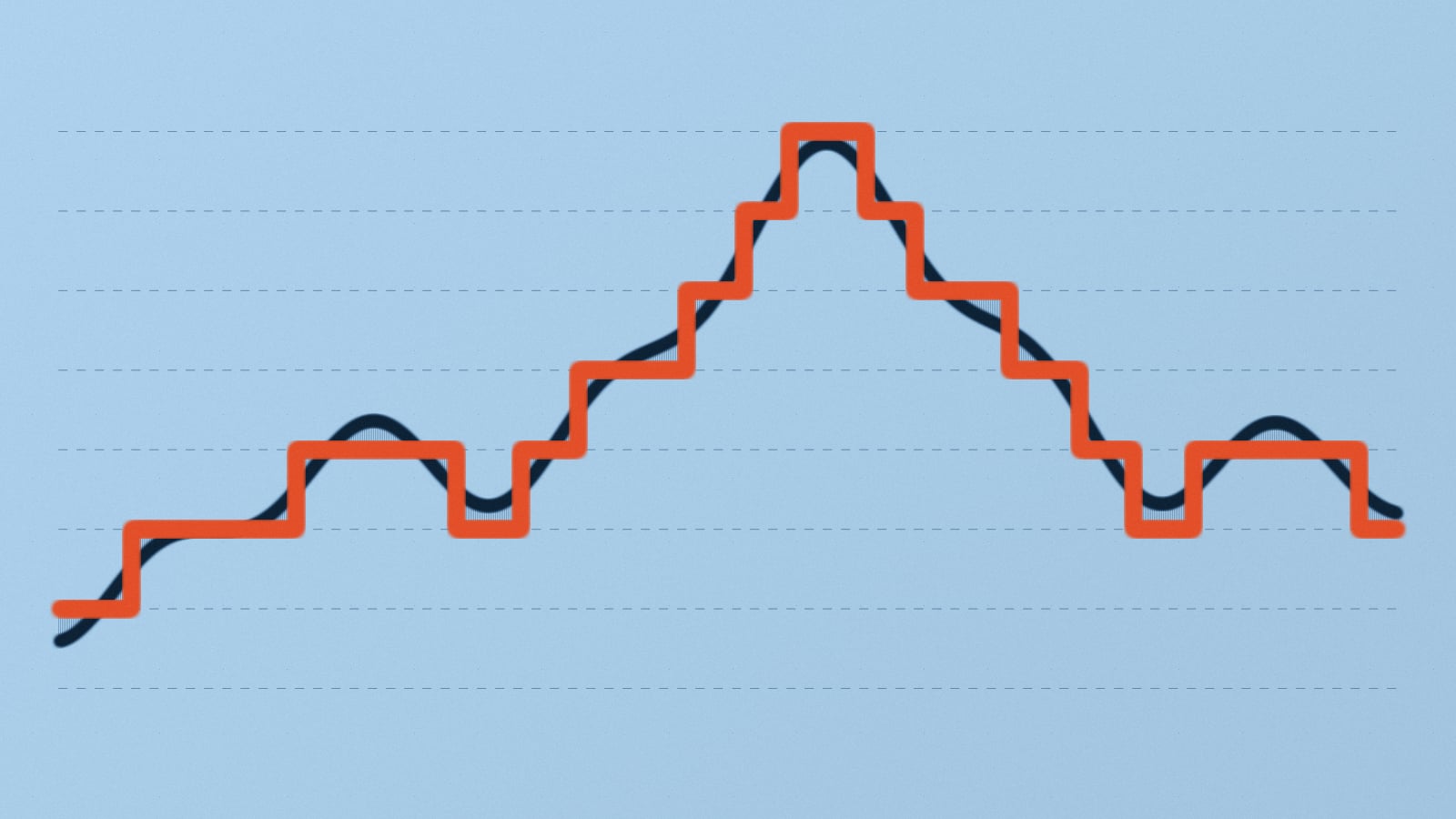
Running a 70-billion parameter language model requires 140 GB of memory in 16-bit precision. That's more than most consumer GPUs can handle, and even enterprise deployments struggle with the costs. Quantization - the art of reducing numerical precision while preserving model quality - has become essential for making large language models practical. Recent breakthroughs have pushed the boundaries from 8-bit to 4-bit, and now even 2-bit precision, achieving compression ratios that seemed impossible just two years ago.
Quantization Visualization
See how weights are compressed from 32-bit to 8-bit precision
import numpy as npimport matplotlib.pyplot as plt# Simulate neural network weights (normally distributed)np.random.seed(42)weights_fp32 = np.random.randn(10000) * 0.5# Quantize to int8 (simulated)def quantize_int8(weights):scale = (weights.max() - weights.min()) / 255zero_point = -weights.min() / scalequantized = np.round(weights / scale + zero_point).astype(np.int8)# Dequantize backdequantized = (quantized.astype(float) - zero_point) * scalereturn quantized, dequantized, scalequantized, dequantized, scale = quantize_int8(weights_fp32)error = weights_fp32 - dequantizedfig, axes = plt.subplots(2, 2, figsize=(12, 8))# Original weights distributionax = axes[0, 0]ax.hist(weights_fp32, bins=100, color='C0', alpha=0.8, edgecolor='none')ax.set_title('Original Weights (FP32)')ax.set_xlabel('Weight Value')ax.set_ylabel('Count')ax.axvline(x=0, color='white', linestyle='--', alpha=0.5)# Quantized weightsax = axes[0, 1]ax.hist(quantized, bins=50, color='C1', alpha=0.8, edgecolor='none')ax.set_title('Quantized Weights (INT8)')ax.set_xlabel('Quantized Value')ax.set_ylabel('Count')# Dequantized vs Originalax = axes[1, 0]sample = 200ax.scatter(weights_fp32[:sample], dequantized[:sample], alpha=0.5, c='C2', s=10)ax.plot([-2, 2], [-2, 2], 'w--', alpha=0.5, label='Perfect')ax.set_xlabel('Original (FP32)')ax.set_ylabel('Dequantized')ax.set_title('Reconstruction Quality')ax.legend()# Quantization errorax = axes[1, 1]ax.hist(error, bins=100, color='C3', alpha=0.8, edgecolor='none')ax.set_title(f'Quantization Error (RMSE: {np.sqrt(np.mean(error**2)):.4f})')ax.set_xlabel('Error')ax.set_ylabel('Count')plt.tight_layout()plt.show()print(f"Memory: FP32 = {weights_fp32.nbytes/1024:.1f}KB → INT8 = {quantized.nbytes/1024:.1f}KB")print(f"Compression ratio: {weights_fp32.nbytes / quantized.nbytes:.1f}x")print(f"Mean absolute error: {np.mean(np.abs(error)):.5f}")
python loads on first run, about 18 mb, cached by your browser
The Fundamentals of Quantization
What Is Quantization?
Quantization maps high-precision floating-point numbers to lower-precision representations. In the context of neural networks, this typically means converting 32-bit or 16-bit weights to 8-bit, 4-bit, or even lower bit-widths.
The core quantization formula is:
Where:
- is the original weight value
- is the scale factor (determines the step size between quantized values)
- is the zero-point (offset for asymmetric quantization)
- is the quantized-then-dequantized value
Symmetric vs. Asymmetric Quantization
Symmetric quantization assumes weights are centered around zero:
Symmetric quantization, 8-bit
- Scale:
s = max(|w|) / 127 - Zero-point:
z = 0
Asymmetric quantization allows the zero-point to shift, better capturing distributions that aren't centered at zero:
Asymmetric quantization, 8-bit
- Scale:
s = (w_max - w_min) / 255 - Zero-point:
z = w_min
| Method | Pros | Cons |
|---|---|---|
| Symmetric | Simpler computation, faster inference | Wastes precision if distribution is skewed |
| Asymmetric | Better utilizes full quantization range | Requires storing zero-point, slightly slower |
Quantization Approaches: PTQ vs. QAT
Post-Training Quantization (PTQ)
PTQ quantizes a pre-trained model without additional training. It's fast and convenient but can suffer accuracy loss, especially at low bit-widths.
Post-training quantization pipeline
- Pre-trained modelFull precision (FP16/FP32)
- Calibration datasetRun a small dataset to determine weight and activation ranges
- Compute scales and zero-pointsScale
sand zero-pointzper layer - Quantized modelINT8/INT4 weights
Quantization-Aware Training (QAT)
QAT simulates quantization during training, allowing the model to adapt to reduced precision. It achieves better accuracy but requires significant computational resources.
Quantization-aware training
Forward pass
w_float- Quantize
w_quant- Dequantize
w_fake
Backward pass
- Gradient at
w_fake∂L/∂w_fake
- Gradient for
w_float∂L/∂w ≈ ∂L/∂w_fake
| Approach | Training Cost | Accuracy at 4-bit | Use Case |
|---|---|---|---|
| PTQ | None | Good (with calibration) | Quick deployment |
| QAT | High (full retraining) | Excellent | Production systems |
Quantization Error Analysis
Understanding quantization error is crucial for designing effective compression schemes. The mean squared error (MSE) from quantization is:
For uniform quantization with step size , the error is bounded by:
This assumes the quantization error is uniformly distributed over .
The Outlier Problem
LLM weights often contain outliers - values significantly larger than the typical range. These outliers devastate naive quantization:
Weight distribution with outliers
- Outliers are about 0.1% of weights.
- If the scale is set by the outliers (max = 2.0), most weights get very few quantization levels.
Solutions to the outlier problem include:
- Per-channel quantization: Different scales for different output channels
- Mixed-precision: Keep outlier channels in higher precision
- Outlier-aware methods: Explicitly handle outliers (e.g., SmoothQuant, AWQ)
QuIP#: State-of-the-Art Extreme Compression
The QuIP# paper from Cornell (2024) achieved a breakthrough in extreme quantization, enabling 2-bit precision with minimal accuracy loss. With 215 citations in under two years, it has become a foundational technique for LLM compression.
The Key Insight: Incoherence
QuIP#'s central innovation is using Hadamard transforms to make weight matrices incoherent before quantization. Incoherence means the weights are "spread out" uniformly, without concentrated outliers.
Incoherence via the Hadamard transform
H× (incoherent)Before: outliers concentrated on specific entries. After the Hadamard transform: energy spread uniformly across all entries.
The Hadamard Transform
The Hadamard matrix is a square matrix with entries satisfying:
For dimension , it's constructed recursively:
QuIP# applies Hadamard transforms to both rows and columns of weight matrices:
Because is orthogonal, the transformation is lossless (can be perfectly reversed) and can be fused into adjacent layers with minimal overhead.
"The Hadamard transform spreads the energy of outlier weights across all entries, creating a more uniform distribution that is far easier to quantize accurately." - Tseng et al., QuIP#, 2024
Lattice Codebooks
The second innovation in QuIP# is using lattice codebooks instead of uniform quantization grids. A lattice is a regular geometric arrangement of points that provides optimal quantization for incoherent vectors.
Uniform grid vs. lattice codebook
Uniform 2D grid
- Evenly spaced pointsWasted space between points
E8 lattice (8D)
- Optimal sphere packing in 8 dimensionsQuantization points arranged to minimize the average distance to any weight vector
QuIP# uses the E8 lattice for 2-bit quantization. The E8 lattice achieves the optimal packing density in 8 dimensions, meaning quantized weights are, on average, closer to their original values than any other arrangement.
QuIP# Results
| Model | Method | Bits | Perplexity (WikiText-2) |
|---|---|---|---|
| Llama-2-70B | FP16 | 16 | 3.32 |
| Llama-2-70B | GPTQ | 4 | 3.85 |
| Llama-2-70B | QuIP | 4 | 3.48 |
| Llama-2-70B | QuIP# | 2 | 4.16 |
QuIP# achieves 2-bit quantization with perplexity within 25% of full precision - a remarkable result that was considered impossible just a few years ago. This translates to 8x compression, reducing a 140 GB model to under 18 GB.
KV Cache Compression with GEAR
While weight quantization reduces model storage, KV cache compression addresses a different bottleneck: memory usage during inference. The GEAR paper (2024), with 128 citations, presents an elegant solution.
The KV Cache Problem
During autoregressive generation, transformers cache the key and value tensors from all previous tokens to avoid recomputation. For long sequences, this cache dominates memory usage:
Memory at 128K context (Llama-3)
GEAR: Quantization + Low-Rank + Sparse Residuals
GEAR (Generative Efficient Attention caching with Residual approximation) combines three compression techniques:
GEAR compression pipeline
- Original KV cache (FP16)
- Uniform quantization (INT4)Captures the bulk of the information cheaply
- Low-rank approximation (SVD)Captures systematic quantization error
K̂ ≈ U × S × V^T (top-r singular values)
- Sparse outlier storageStores only the top-k largest residual entries to handle the remaining outliers
The reconstruction is:
Where:
- is 4-bit uniform quantization
- is the low-rank correction (rank 2-4)
- is the sparse residual (top 1-2% of entries)
GEAR Results
| Method | Bits | Memory Reduction | Accuracy Loss |
|---|---|---|---|
| FP16 (baseline) | 16 | 1x | 0% |
| Naive INT4 | 4 | 4x | 8-15% |
| KIVI | 2 | 8x | 3-5% |
| GEAR | ~3 | 5-6x | <1% |
"GEAR achieves near-lossless compression of the KV cache with 5-6x memory reduction, enabling longer context windows and larger batch sizes without quality degradation." - Kang et al., GEAR, 2024
Practical Quantization: Choosing the Right Approach
Decision Tree for Quantization Strategy
Quantization strategy selection
- What's your constraint?
- Memory (edge)
QuIP# (2-bit)
Accuracy criticalQAT (8-bit)
BothGPTQ/AWQ (4-bit)
- Add GEAR for the KV cache
Compression Comparison
| Technique | Compression | Quality | Complexity | Best For |
|---|---|---|---|---|
| INT8 PTQ | 2x | Excellent | Low | Quick deployment |
| GPTQ 4-bit | 4x | Good | Medium | Consumer GPUs |
| AWQ 4-bit | 4x | Very Good | Medium | Production |
| QuIP# 2-bit | 8x | Good | High | Maximum compression |
| GEAR (KV) | 5-6x | Excellent | Medium | Long context |
The Mathematics of Optimal Quantization
Rate-Distortion Theory
The fundamental limit of quantization is described by rate-distortion theory. For a source with distribution and distortion measure , the minimum achievable rate (bits) at distortion is:
For Gaussian sources with mean squared error distortion:
This means each halving of the distortion requires one additional bit per value.
Why Lattices Are Optimal
Vector quantization outperforms scalar quantization because it exploits correlations. For -dimensional vectors, the normalized second moment measures quantization efficiency:
Where is the volume of the quantization cell. The E8 lattice achieves:
Compared to uniform scalar quantization:
This 14% reduction in quantization error per dimension compounds significantly over millions of weights.
Future Directions
Emerging Techniques
-
1-bit quantization: Binary and ternary networks are approaching practical quality for specific tasks
-
Dynamic quantization: Adjusting precision based on input difficulty or layer importance
-
Quantization-aware architecture design: Models designed from scratch for efficient quantization
-
Hardware co-design: Custom accelerators optimized for specific quantization formats
The Path to Sub-2-Bit
Theoretical compression limits
Conclusion
Quantization has transformed from a nice-to-have optimization into a critical enabling technology for large language models. The journey from 16-bit to 2-bit precision - an 8x compression - makes models like Llama-2-70B accessible on consumer hardware.
The key insights from recent research are:
-
Incoherence matters: QuIP# showed that preprocessing weights with Hadamard transforms enables extreme quantization by eliminating outliers
-
Optimal codebooks: Lattice-based quantization (E8 lattice) provides theoretically optimal compression for incoherent weight distributions
-
KV cache is the next frontier: GEAR demonstrates that combining quantization, low-rank, and sparse approximations achieves near-lossless compression
-
Theory guides practice: Rate-distortion theory and optimal transport provide principled frameworks for understanding quantization limits
As models continue to grow - GPT-4 class systems likely exceed 1 trillion parameters - efficient compression becomes ever more critical. The mathematics of quantization, from Hadamard transforms to lattice codebooks, will remain essential knowledge for anyone deploying large language models at scale.
This article cites peer-reviewed research from Semantic Scholar, including studies from leading institutions in machine learning and systems research. For complete bibliographic information, see the hyperlinked references throughout the text.